Originally, we at Form and Fury chose not to publish this. And by we, I mean me. Corinne Votaw. Editor of Form and Fury. This is the first opinion piece on Form & Fury. It will not be the last.
We initially decided not to publish anything. We told the team directly, when they requested coverage post match, that any honest coverage would likely be critical. We also explained that leaving early made proper game coverage impossible. That was our way of saying: you don’t want this piece.
The team’s marketing department disagreed and continued pushing for coverage under the terms of our media credential agreement. After a few rounds of back-and-forth, it became clear that not publishing wasn’t going to be accepted as an answer. The team bypassed me and went straight back to…. me. The weird part was their attempt this morning to tell us at FF they hadn’t received any information about this coverage. They were told just a few hours earlier about the coverage. Beats me.
I want to say this plainly: pressuring media into coverage is exactly the wrong approach to building loyalty with the people who show up, shoot, and write about your sport when larger media outlets can’t or won’t. That’s worth naming before anything else.
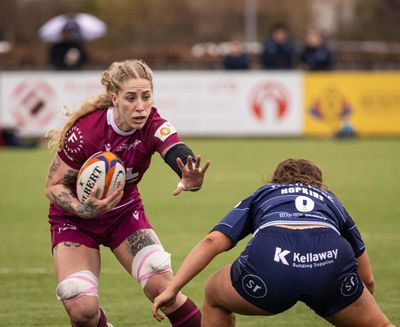
We chose not to publish not because the match lacked quality. Not because the players failed to perform, or the coaches failed to prepare, or the rugby itself wasn’t worth watching. From what my wife and I saw, the opposite was true. California Legion and the Seattle Seawolves played a competitive, physical, entertaining match on April 19 at Wallis Annenberg Stadium in Los Angeles. California won 38–29.
On paper, exactly the kind of game Major League Rugby should want people talking about. But people aren’t talking about it.
I should be upfront: we left at halftime. That makes a traditional match recap inappropriate — it would be dishonest to write one — so this isn’t that. This is an opinion piece about what we did see, and what it points to.
Wallis Annenberg Stadium holds 2,145 people. Smaller than many high school football stadiums. And on that Sunday, even that felt ambitious for the crowd inside it.
California Legion exists because San Diego Legion and RFC Los Angeles merged into a statewide brand. The pitch is consolidation as strategy — that a California-wide identity gives the sport a better foothold than two fragile city franchises. Maybe that’s true. It’s also an admission that neither market was sustainable on its own, which is a failure dressed up as a vision statement.
That’s MLR in 2026. The league peaked at 13 teams. Houston, Miami, NOLA, and Utah are gone. Six teams remain. The league is smaller than some regional club circuits and still talking about momentum.
We left at halftime. Not angry. Tired.
Angry would mean I expected something and got let down. This felt more like watching something with real ability keep making the same avoidable mistakes. Sitting in traffic on the 405 afterward felt about as rewarding as staying would have, and that should bother everyone who claims to care about where this sport is headed.
Here’s what makes it harder: rugby is actually working in America. Just not here.
Kansas City drew 10,518 fans for a USA women’s match against Canada — the largest standalone crowd in USA Women’s Rugby history. The 2026 Women’s Six Nations broke its total attendance record through just three rounds. England vs. Ireland pulled 77,120 at Allianz Stadium. The women’s game has identity, community, athletes people actually follow, and events that feel like events.
The USA Women’s Eagles vs. Fiji match on July 19, 2025, at Audi Field in Washington, D.C. drew a crowd of 15,198… and the crowd size shrank after the women finished, before the men’s match was due to start.
The men’s professional game has the physical product. It keeps failing to build anything around it.
You can’t merge two struggling franchises and call it a market strategy. You can’t put a team in a 2,000-seat venue, slap a statewide name on it, and expect fans to manufacture their own reasons to care. Atmosphere isn’t built by scorelines. It’s built by the sense that what’s happening in front of you matters beyond the eighty minutes. That feeling wasn’t there.
The 2028 Olympics are in Los Angeles. The men’s Rugby World Cup comes to the U.S. in 2031, the women’s in 2033. Those could still be transformative moments. But you can’t parachute a World Cup into a country and expect it to land on fertile ground if nobody’s been tending the soil.
The Legion players deserved a better house. So did the Seawolves. So did every fan who drove out on a Sunday hoping the thing they showed up for felt alive.
Criticism isn’t the enemy of rugby’s growth. Indifference is. The people still showing up, still writing, still shooting… we’re not the problem. We’re often the last ones still trying to believe in it.
Men’s professional rugby in America isn’t failing because the sport is bad. It’s failing because the people running it keep mistaking survival for success.
I wanted to leave that stadium feeling encouraged. I didn’t.