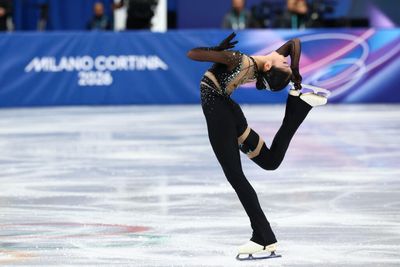
China’s Zhang Ruiyang stepped onto the Olympic stage for the women’s free skate with the kind of quiet intensity that can cut through the noise of a packed arena. In a field stacked with medal contenders and multi-quad headlines, her task was different: claim her space, skate her story, and show that China’s next generation in women’s singles belongs in the conversation.
Zhang entered the free program having qualified in 20th from the short program, placing her in the first warm-up group and an early slot in the running order. That’s often the toughest real estate at the Games—before the building reaches full boil, before the leaderboard settles, and long before the spotlight narrows to the favorites.
Her free skate soundtrack, drawn from Miss Saigon, gave the performance a ready-made emotional arc—restless, cinematic, and built for big crescendos. Zhang leaned into that shape, skating with urgency through the program’s turns and transitions, letting the music carry her from restraint to release as the routine unfolded.
For China, the moment was also a payoff for a qualification pathway that demanded composure under pressure. Zhang earned the Olympic berth by delivering at the final qualifying event in Beijing, a performance that put her on the plane to Italy and into the center of the sport’s brightest fortnight.
The Milano Cortina women’s event has been defined by tight margins from the start, with Japan’s skaters setting the pace after the short program and a deep pack chasing behind them. In that kind of competition, every skater’s free program becomes its own referendum—not just on medal chances, but on readiness, resilience, and what comes next.
Zhang’s free skate didn’t need a podium narrative to matter. It was a young athlete’s Olympic introduction in full: a program chosen for drama, delivered in the most unforgiving environment the sport can offer, and aimed squarely at building the kind of belief that lasts long after the final scores are posted.